

My Best Grade Team 1980s and 90s - Tim Sullivan
Tim Sullivan | November 24, 2025
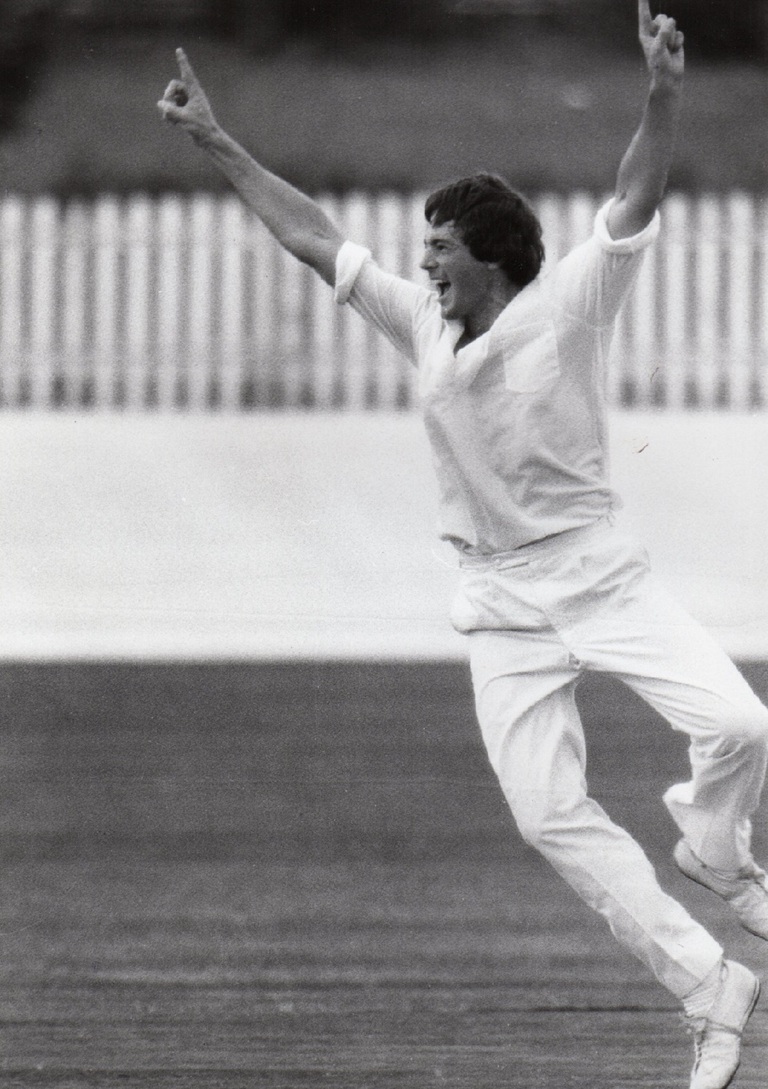
It is a privilege to have this chance to pick the best team of players with whom I played in Sydney grade cricket for Penrith and Bankstown. It is a Mug’s Luck that I had the fortune to play with so many first-class and Test cricketers, and just to show how challenging grade cricket was in the 1980s and 1990s, I am going to exclude them from selection. That means leaving out John Benaud, Trevor Bayliss, Rod Bower, ME and SR and DP Waugh, SB Smith, Bobby Vidler, Dave Freedman, Scott Prestwidge, Len Pascoe, ‘Jack’ Small, Scott Thompson, Peter Clough, Jason Arnberger, and the wizard behind the stumps, Terry Davies. Except…I am picking Wayne Holdsworth just for the thrill of seeing him charging in again!
My selections attribute each player with the club where we played together.
At the top I’m going for Gary Crowfoot (Bankstown). Wonderful technique off either foot for opening the batting, fierce concentration, scored runs under pressure and against the best bowlers, and a smart catcher behind the wicket. To partner him, Steve Kennaugh (Penrith). Much like Crowfoot in consistency and technique, Kennaugh’s nippy right-arm seamers were good enough to take the new ball when needed, and he was one of the best fielders in any position I played with. Brett Elliott (Bankstown) emerged as a very good opener in Bankstown’s success in the early 1990s, and Brian Wood (Penrith) was a classy player who scored a lot of important runs and was a brilliant fielder to boot, but Kennaugh’s all-round ability and consistency wins him the spot.
At no. 3, it’s a choice between Dave Laming (Penrith) and Paul Maraziotis (Penrith). I’m going with the leftie Laming for his deft back foot play and ability against fast bowling. His batting in 1978-79 when Penrith won its initial premiership was unforgettable. So was his captaincy of the PG team that year when he welded a mob of tyros into a super-competitive team that played the game joyfully. Maraziotis will bat at 4 and captain the team. Mazza’s consistent run-scoring, his class on all surfaces and against all types of bowling, and especially his brilliance against spin, makes him well suited at 4. His superb catching and useful left-arm wrist spin helps the balance of the team too.
Nos. 5 and 6 present the hardest choices. Either of the Penrith pair of Malcolm Cobcroft or Graham Price, or of the Bankstown trio of Dave Thompson, Darren Mitchell, and Andy Divall would lift the tempo of the innings and provide plenty of power. Cobcroft was an amazing fielder in the inner circle and Thompson was a silky slip catcher. Mitchell’s and Divall’s capacity to bat anywhere between 3 and 6 is attractive, and the reliability of Bankstown’s Grant brothers, Scott and Mark, especially when Mark moved from opening to find his niche in the middle order, is hard to go past. But I am going with the robust left-hander Mitchell at 5 and the mercurial Thompson at 6.
At no. 7 is Ken Hall (Penrith), the brilliant left-handed/left-arm all-rounder whose dashing strokeplay would net 400 runs a season, and then he’d take 40-plus wickets bowling his fast-medium late swing with the new ball and come back to bowl left-arm orthodox spin as well as anyone in the grade. Hall’s amazing close catching could change a game. The all-rounders Trevor McDonald (Bankstown), Ron Hall (Penrith, and cousin of Ken), and Warren Buttigieg (Penrith) make strong claims, but all are fast-medium bowling all-rounders like Hall who has the edge. McDonald was good enough to open the batting in some strong Bankstown sides and Buttigieg was dynamic when runs had to be scored quickly, but Hall’s consistency in delivering runs when they were needed wins him the spot.
The fast bowlers are the Bankstown pair of Wayne Holdsworth and Brett McKirdy. Holdsworth was a magnificent bowler—fast, accurate, tireless, aggressive, and learned the craft of swinging the ball which made him even more dangerous. It was thrilling to be on the field when he was letting them fly. McKirdy was better than fast-medium and could push good players onto the back foot at will. His 50 wickets in the 1982-83 season when Bankstown was runner up to Penrith was as good a season of fast bowling as I saw. Brett was relentless, so skilful in seaming the ball both ways, and was very useful with the bat. Shane Cusick, Phil Kelly, and Ian McRae (Bankstown) are unlucky with the all-round strength of Hall and Kennaugh supporting Holdsworth and McKirdy. If I am not allowed to bend my rule in picking Holdsworth, then I’d bring in Graeme Pitty, the tall, quick left-armer who swung the ball late and bowled a nasty bouncer from around the wicket. Although we were at Penrith and Bankstown together at times and I remember some testing net sessions against Graeme, and although we played against each other, most memorably in the 1982-83 final when Pitty’s Penrith beat Bankstown, I don’t think we played a game together in the same team!
Leg-spinner Tom Shiner (Penrith) and left-arm orthodox Paul Talbot (Bankstown) are the spinners to partner Hall. Shiner was tough on wickets offering any assistance, and although not a big turner of his leg-break, he combined it with a deadly top-spinner and a wrong’un that was hard to pick. Talbot had incomparable control of pace and drift, could turn the ball on any surface, and had a knack for getting the big wicket. Penrith left-armers Bill Newell and Paul Thomas, and Bankstown’s Bill York are unlucky to miss out. I am tempted by the off-spin of Penrith’s trio of Garry Donlan, Barry Thebridge, and Karl Danenbergsons, but I’m backing Talbot and/or Shiner to do the job with Hall. The captain might choose to leave out one of the middle-order batters and play both Talbot and Shiner but the risk is a long tail in the batting.
It’s a red-hot field for keeper. Starting with a handy group of tyros in Nick Geale and Mark Freedman (Bankstown) and Dave White and Doug Hardcastle (Penrith). All had magnificent hands and athleticism. Then there is Sean Pope (Bankstown) and Shane Stanton (Penrith) who were classy glovemen and would each command a top-order batting spot. But I’m going with Les Andrews (Penrith and Bankstown) whose glovework up to the stumps was brilliant. Les kept to all the bowlers I’ve picked, was a smart tactical support for the bowlers, and early in his career scored valuable runs in the lower order. In a memorable match in 1982-83 against Sydney Uni at Bankstown, Les took nine catches in an innings with such typically quiet efficiency that nobody noticed until the tenth wicket fell—a run out at the bowler’s end.
The final team is:
1. G. Crowfoot
2. S. Kennaugh
3. D. Laming
4. P. Maraziotis (Capt.)
5. D. Mitchell
6. D. Thompson
7. K. Hall
8. B. McKirdy
9. L. Andrews
10. P. Talbot
11. W. Holdsworth
12. T. Shiner
To umpire, I’d have Dick French or Graeme Reed or Rocky Harris or Arthur Watson or Tom Brooks or Stephanie Davidson or Ian Thomas or Darrel Hair or John Murphy or Jack Hennessy or Mark Vergano or Lance Brooks or so many others in a great era for umpires too. And wouldn’t they have some stories to tell in the clubhouse!
A lot of players from the Hawkesbury region feature in my thinking. Before Hawkesbury came into the grade cricket competition, Penrith drew on the Hawkesbury for many wonderful players, and to a lesser extent on Campbelltown and Camden too until Campbelltown was admitted into the grade competition with Hawkesbury and Fairfield. Those new clubs coming into the competition created a lot of movement from Penrith and Bankstown, so the rivalry when Penrith or Bankstown played the new clubs was always pretty intense as former teammates tried to get one up on each other. The friendships created in former times always endured off the field, though. Such great days.



Good read Tim. Hope this finds you well