
BWCUCC History Series: Burnside Park Becomes Home
Burnside West Christchurch University Cricket Club | November 28, 2025
By the early 1970s, Burnside West Christchurch University Cricket Club found itself on the cusp of something brave. The long, 67-year stint at Hagley Park – all those windy Saturdays, all those familiar walks past the old pavilion – came to an end in 1972–73 when the West Christchurch/University side folded into the emerging Burnside club.
It must have been quite a sight: crates of gear trundling out of Hagley Oval, the last echoes of leather on willow as a home side drifting across the park, and a new horizon opening to the north-west. Burnside Park wasn’t just a change of venue. It was a declaration of intent – fresh fields framed by tall trees and distant hills, waiting to be shaped into a cricketing home.
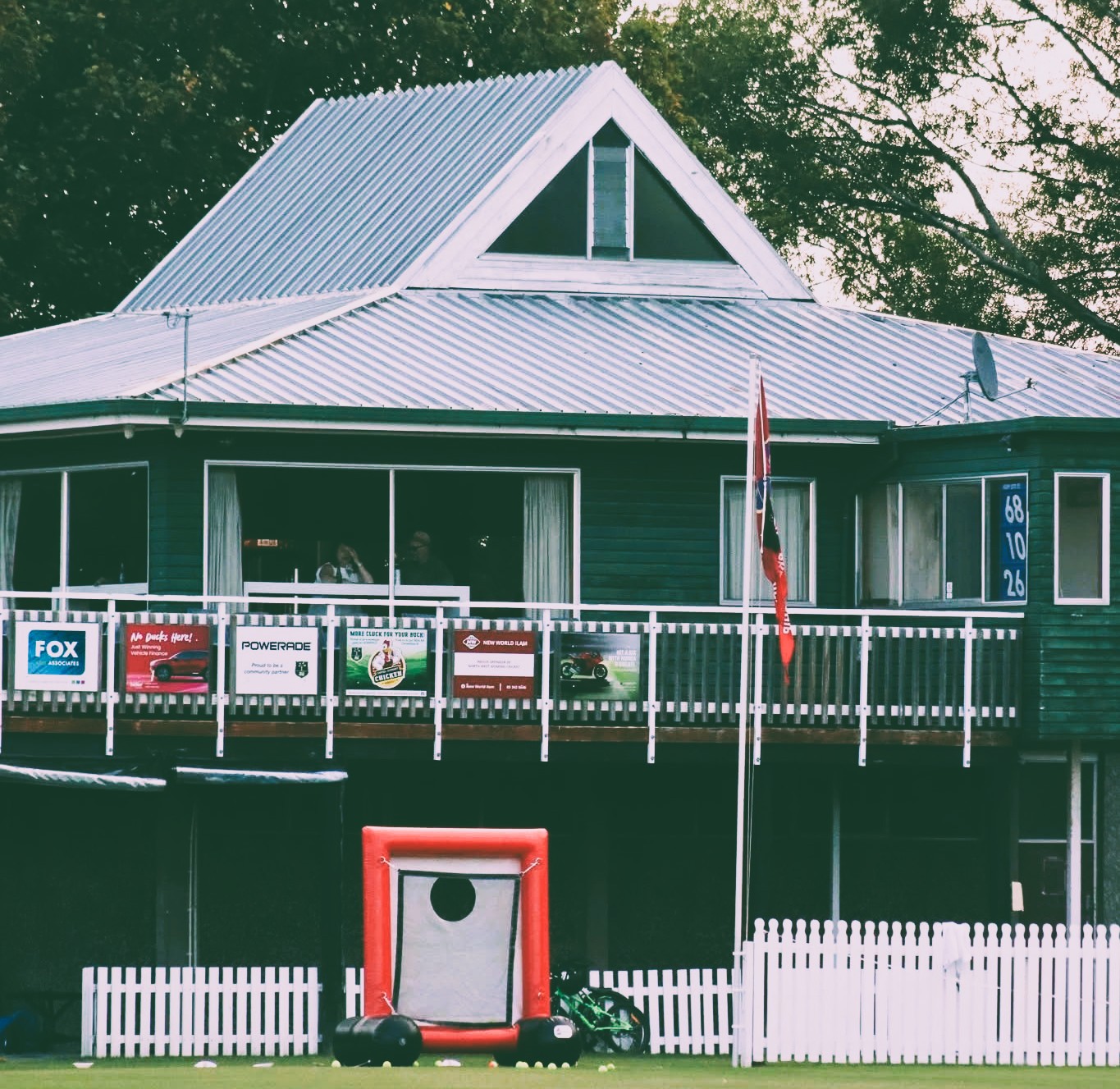
And that’s exactly what happened. Burnside became a working bee. Volunteer tradies, parents, players – half the suburb, really – rolled up their sleeves and set about transforming a modest changing shed into a proper pavilion of brick and timber. Showers went in. A social room appeared. A verandah stretched wide enough for afternoon teas that could feed an army. Nets sprang up behind the boundary; later, floodlights flickered into life as evening practices became part of the rhythm. By the end of that first summer nearly ten junior teams were already in the maroon and gold. In suburban cricket, nothing speaks louder than a swelling junior roll.
On the park, Burnside Park didn’t take long to harden into a fortress. Through the ’70s and ’80s the Premier sides – many made up of players raised on the club’s own outfields – started lifting Canterbury trophies with a bit of swagger. The old names, Kerr, Dowling, Donnelly, seemed to linger like shadows on the grass as a new generation learned the game under Burnside’s nets.
The pipeline kept flowing. Kids who started in mini-cricket grew into Premier batters and bowlers, and a few kept going: Canterbury colours, and for some, the black cap. A suburban nursery producing national talent – that’s the quiet magic of clubs like this.
But the silverware was only ever half the point. What Burnside built was a culture. Saturdays developed their own easy rhythm: the early-bird families with thermoses steaming in the cool air, uncles dragging sight-screens into place, toddlers hurtling across the outfield between overs. Volunteers mowing by day, turning spit-roasts by night. Parents scoring, repairing nets, holding the place together with the kind of goodwill that doesn’t show up in annual reports. The pavilion became a community hall as much as a clubhouse – quiz nights, fundraisers, Christmas barbies, and eventually a space where women’s and girls’ cricket folded naturally into the fabric of the club. Inclusive before “inclusive” became a buzzword.
More than fifty years on, that decision to leave Hagley for Burnside still feels like the club’s hinge moment. On warm summer evenings the pavilion hums while coaches tally up runs, and juniors – some the great-great-grandchildren of those early members – run wild on the emerald grass. The old red scoreboard glows through the dusk like a lighthouse of memories. Hagley’s roar belongs to history now, but the spirit didn’t stay behind. It moved, it grew, and it embedded itself here.
From that scrappy first summer in 1972, a suburban powerhouse took root – a club built on pride, generosity and an unwavering belief in the game. And as Burnside looks ahead to its second century, it does so with the same values that shifted it here in the first place: community first, cricket always, and a future shaped by the people who show up.

Clip from BeaconPoint Family Forum - How can parents teach their kids to embrace anxiety in a positive way?